
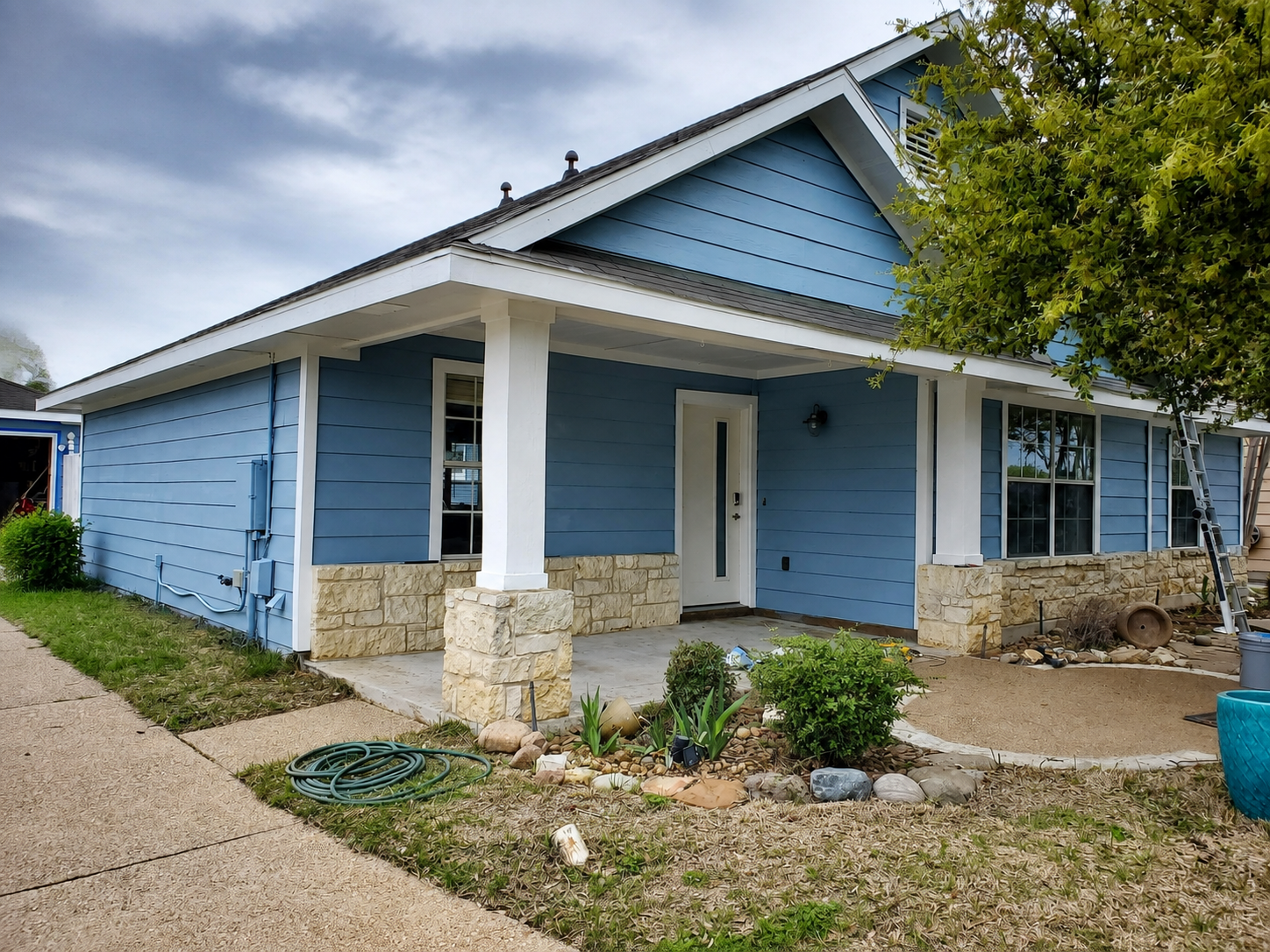
Quick answer: what should Austin homeowners budget?
Current published Austin cost guides place exterior house painting in a broad range of approximately $1,700–$9,500, with many straightforward projects falling somewhere in the middle. Larger homes, two-story access, extensive prep, masonry, detailed trim, and premium coating systems can push the total higher.
These numbers are useful for early planning, but they are not a VAM Services LLC quote. A written estimate should be based on the actual exterior surfaces and condition—not only the home’s interior floor area.
Why 2,000 sq ft of floor area is not 2,000 sq ft to paint
The 2,000 sq ft number describes floor area inside the home. Exterior painters measure the surfaces outside: siding, gables, soffits, fascia, trim, doors, and sometimes masonry. The footprint, roof shape, ceiling height, number of stories, windows, and attached garage all change the paintable area.
For a simple one-story home with about 2,000 sq ft of floor area, a reasonable early planning assumption is roughly 2,500–4,000 sq ft of main paintable siding and exterior surfaces after allowing for openings. A home with a more complicated footprint, taller walls, a garage, or substantial trim can exceed that range. This is a budgeting model, not a substitute for measuring the house.
A simple exterior-area model
- Measure the outside perimeter or each elevation.
- Multiply wall length by average wall height.
- Add gables and other upper sections.
- Subtract windows, doors, and areas that will not be painted.
- List siding, trim, soffits, fascia, doors, and masonry separately.
How many gallons of exterior paint might a 2,000 sq ft home need?
Quality paint manufacturers commonly use about 400 sq ft per gallon for one coat as a practical planning rule, while the exact label coverage varies by product and surface. Rough siding, porous areas, texture, spray application, overspray, and paint left in equipment can reduce actual coverage.
| Paintable area | One coat at 400 sq ft/gal | Two coats at 400 sq ft/gal |
|---|---|---|
| 2,500 sq ft | About 6–7 gallons | About 13 gallons |
| 3,000 sq ft | About 8 gallons | About 15 gallons |
| 4,000 sq ft | About 10 gallons | About 20 gallons |
These figures are for the primary paintable surfaces only. White or contrasting trim, doors, shutters, soffits, fascia, porch ceilings, and spot primer add material. A dramatic color change or a very absorbent surface may also require an extra coat. Always use the coverage and recoat instructions for the selected product.
For reference, Sherwin-Williams training materials describe an average gallon as covering approximately 350–400 sq ft, while Benjamin Moore notes that coverage is product-specific. That is why a contractor should calculate material after reviewing the actual siding and finish system.
What preparation should be included?
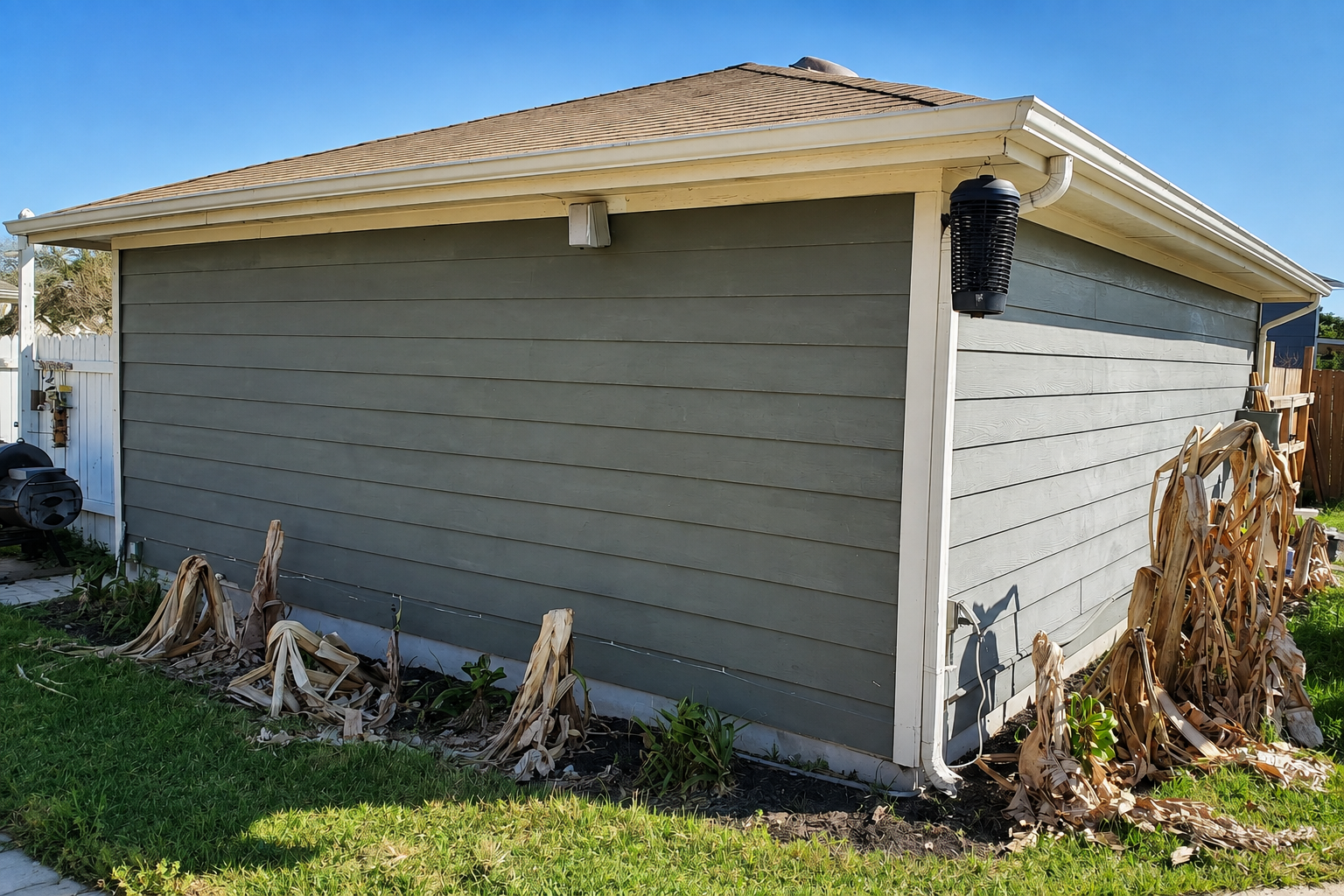
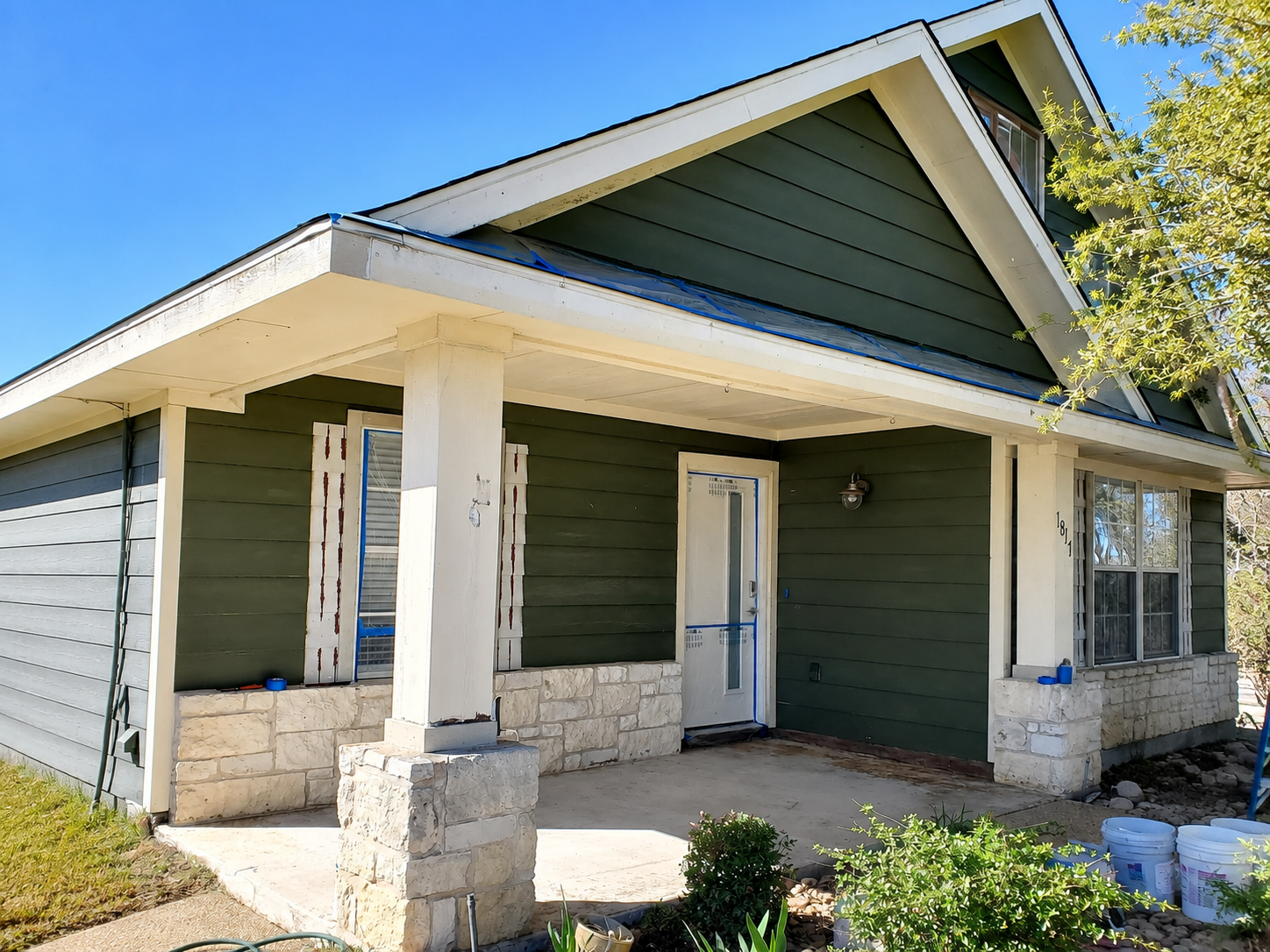
Preparation is where two apparently similar exterior painting estimates often become very different. A careful project may include:
- checking siding, trim, caulk joints, and exposed areas;
- cleaning or washing away dirt, chalk, mildew, and cobwebs;
- scraping loose or peeling coating;
- sanding rough edges and feathering transitions;
- filling minor holes and patching small surface defects;
- replacing failed caulk where appropriate;
- spot-priming bare, repaired, stained, or difficult-to-coat areas;
- masking windows, doors, lights, hardware, and finished masonry;
- protecting plants, walkways, patios, vehicles, and outdoor fixtures;
- applying the finish coats and completing touch-ups and cleanup.
Soft wood, wood rot, major stucco cracks, damaged siding, or substantial drywall and texture work should be identified separately. If the exterior project includes damaged wall surfaces, ask whether the repair belongs in a separate drywall repair scope.
How Austin heat and sun affect the estimate
Exterior paint in Central Texas has to live through strong sunlight, hot surfaces, sudden rain, wind, and seasonal temperature changes. The south and west elevations may be more exposed than shaded sides of the house. A good plan considers product suitability, surface temperature, dry time, and a safe weather window.
Crews should follow the selected paint manufacturer’s instructions for application temperature, humidity, rain, and recoat time. Painting a hot wall in direct afternoon sun or coating a damp surface can affect leveling, adhesion, and the final appearance. Scheduling around the weather is part of protecting the investment—not an unnecessary delay.
The biggest factors in exterior house painting cost
Home size and layout
Perimeter, gables, attached garages, porches, and multiple elevations affect the surface area and setup.
Stories and access
Second-story walls, high gables, steep rooflines, and tight side yards require more ladder work or specialized access.
Siding and substrate
Wood, fiber cement, vinyl, stucco, and masonry each need different preparation and coating decisions.
Trim and extra surfaces
Fascia, soffits, columns, doors, shutters, porch ceilings, and detailed trim take additional masking and brush work.
Color and coat count
Dark-to-light changes, intense colors, stains, and weak existing coverage may require extra material or coats.
Current condition
Peeling paint, chalking, failed caulk, cracks, bare areas, and repairs increase preparation time before painting.
What a professional exterior painting estimate should show
- Surfaces: siding, gables, trim, soffits, fascia, doors, shutters, masonry, and exclusions.
- Preparation: washing, scraping, sanding, caulking, repairs, primer, and protection.
- Paint system: product level, sheen, colors, and expected number of coats.
- Access: ladders, staging, lift requirements, gates, landscaping, and difficult elevations.
- Completion: cleanup, touch-ups, schedule assumptions, warranty language, and payment terms.
A clear scope makes it easier to compare bids. A lower price may simply leave out trim, repairs, primer, protection, or a second coat.
Is exterior painting connected to drywall repair?
Most exterior projects involve siding or masonry rather than interior drywall. However, leaks, damaged soffits, wall openings, and interior water damage can connect the two scopes. Fixing the source and repairing the affected surface before painting helps avoid covering a problem that will return.
VAM Services LLC can help homeowners coordinate exterior painting with related drywall repairs, texture work, and other finish details when the project requires it.
Get a real exterior painting estimate in Austin
For a useful estimate, send the property address, approximate size, number of stories, siding or masonry type, surfaces to be painted, preferred colors, current condition, and a few photos. Mention peeling, bare wood, failed caulk, high walls, gates, landscaping, or timing concerns.
VAM Services LLC serves Austin and nearby communities with interior and exterior painting, drywall repair, texture work, and related home improvement services. Request a Free Estimate so the scope can be reviewed before work begins.
Frequently asked questions
- How much does exterior house painting cost in Austin, TX?
- Published Austin pricing guides show broad planning ranges from roughly $1,700 to $9,500 or more, depending on the home, siding, height, preparation, and included surfaces. A simple one-story repaint may be near the lower end, while extensive repairs, detailed trim, or difficult access can move the project higher. This is planning information, not a VAM Services LLC quote.
- How much paint does a 2,000 sq ft exterior need?
- A 2,000 sq ft home can have approximately 2,500–4,000 sq ft of paintable exterior siding and trim, but the range changes with the home footprint, number of stories, roofline, windows, doors, and masonry. At about 400 sq ft per gallon for one coat, that is approximately 7–10 gallons per coat for the main paintable surfaces, before extra trim, waste, texture, and primer.
- What preparation is included in exterior painting?
- A professional scope may include washing, scraping loose coating, sanding, caulking, minor patching, spot priming, masking, protecting landscaping, and cleanup. Wood rot replacement, extensive carpentry, major stucco repair, and substantial drywall work should be identified separately.
- When is the best time to paint a house exterior in Austin?
- Exterior paint needs a suitable dry window and product-specific temperature and humidity conditions. Austin heat, direct sun, wind, and rain can affect the schedule, so the crew should follow the paint label and avoid painting a surface that is too hot, damp, or likely to get wet before curing.
- How do I get an accurate exterior painting estimate?
- Share the address, approximate home size, siding or masonry type, number of stories, surfaces to be painted, current condition, preferred colors, and photos. An on-site review lets the estimator see access, peeling, failed caulk, stains, bare areas, and trim details that a square-foot estimate cannot show.