
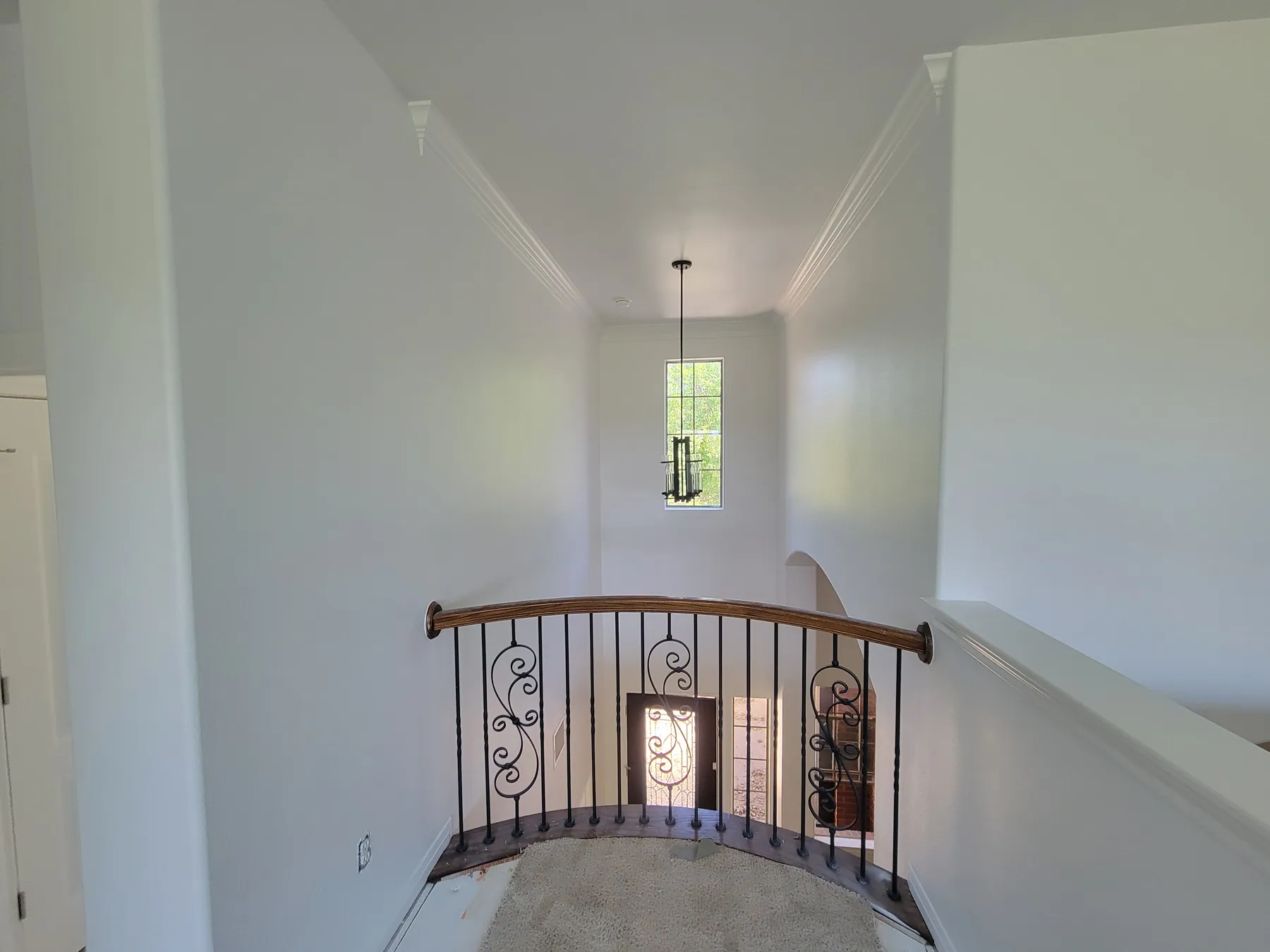
Quick answer: what should you budget?
For early planning, a simple standard-height ceiling may cost a few hundred dollars when access is easy and the surface needs limited preparation. A high or complex ceiling with staging, stair access, repairs, detailed masking, or multiple connected areas can move into the $1,000–$2,500+ range.
These are broad planning examples, not a VAM Services LLC quote. A useful estimate considers the ceiling surface, height, access, condition, number of coats, paint choice, protection, and whether the walls, trim, or adjacent spaces are included.
What makes ceiling painting more expensive?
Ceiling height
Eight-foot ceilings are usually easier to reach than two-story walls, vaulted sections, and open foyers.
Stairwells and open areas
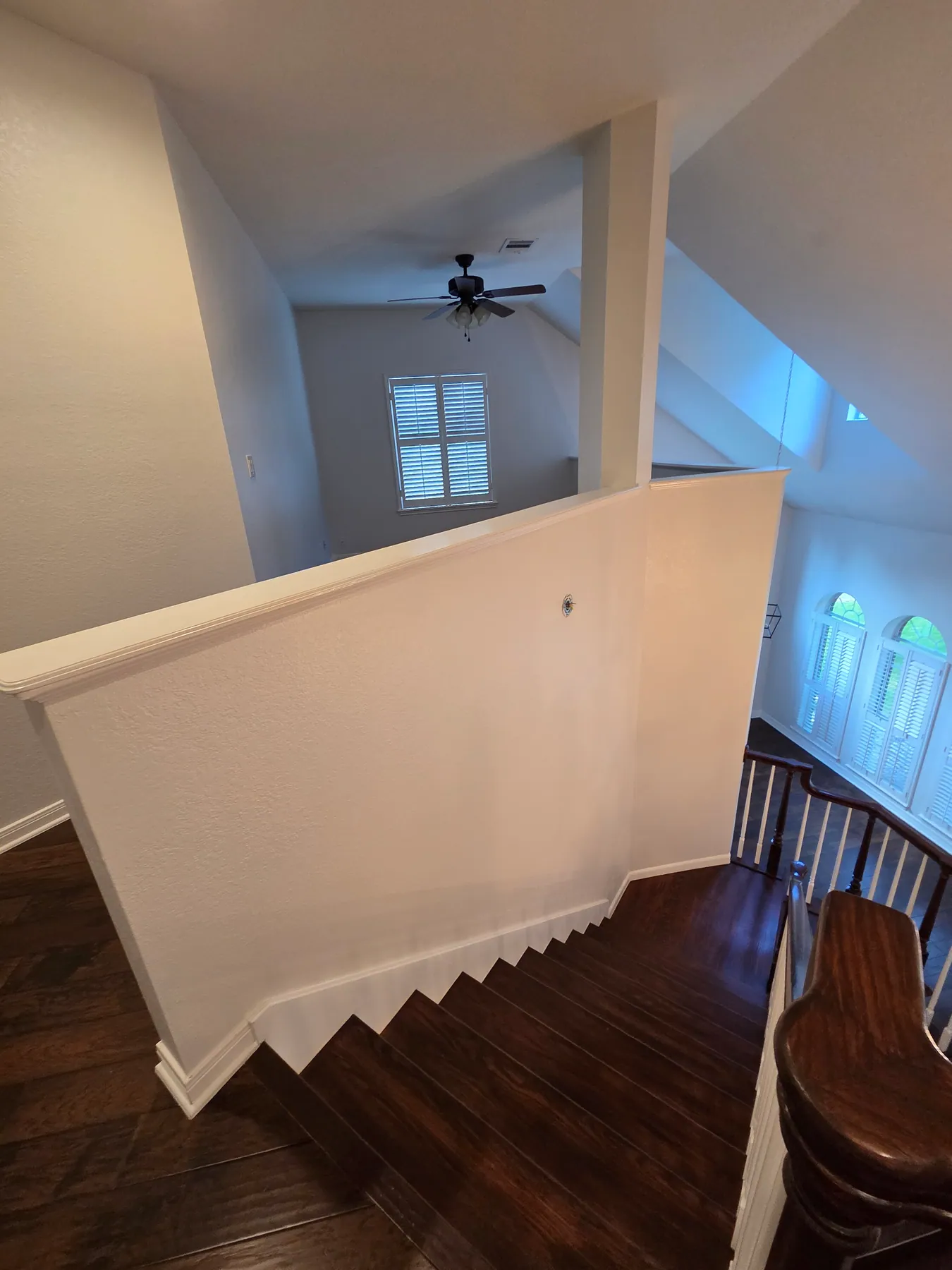
Staircases, landings, railings, and open drops can require specialized staging and a slower, more careful setup.
Surface preparation
Cracks, nail pops, stains, peeling paint, texture differences, and previous repairs can add patching, sanding, or primer.
Protection and masking
Floors, furniture, lights, fans, walls, railings, cabinets, and nearby finishes must be protected from splatter and dust.
Molding and fixtures
Crown molding, beams, vents, chandeliers, recessed lights, and ceiling fans create more edges and detail work.
Color and coating
Stains, dark colors, sheen changes, and a ceiling that needs more than one finish coat can change the material and labor plan.
Why high ceilings and stairwells require more labor
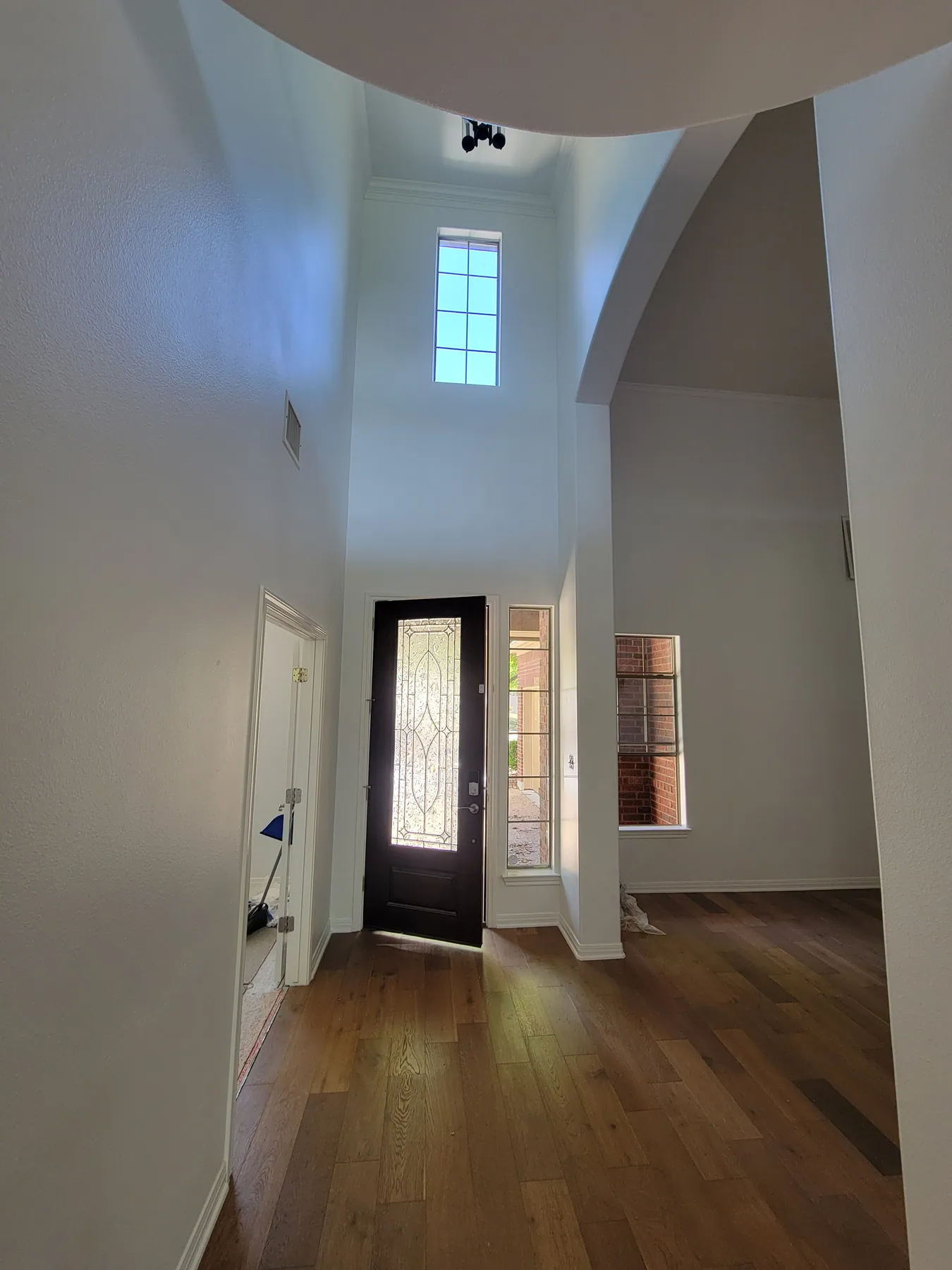
A tall ceiling is not simply a normal ceiling painted with a longer roller. The work may require moving and securing ladders or staging, protecting the stair treads and railing, planning where tools can be placed, and maintaining clean cut lines while working overhead.
Open foyers also connect several surfaces visually. A small mismatch in sheen, lap marks, roller texture, or edge color can be noticeable from multiple floors. Careful lighting checks and controlled application matter more in these spaces.
What preparation should be included?
A professional ceiling painting scope may include:
- Inspecting the ceiling for cracks, stains, loose texture, and previous repairs.
- Cleaning dust and light surface residue where appropriate.
- Patching, sanding, caulking, or spot-priming areas that need correction.
- Protecting floors, furniture, walls, stairs, railings, lights, fans, and nearby finishes.
- Masking crown molding, beams, vents, skylights, and fixtures as needed.
- Setting up safe access for the actual height and shape of the space.
- Applying the selected ceiling coating in controlled coats.
- Checking coverage, edges, touch-ups, cleanup, and removal of protection.
If a ceiling has active water damage, recurring stains, or loose texture, the source and surface condition should be addressed before the final coating is selected. Painting over an unresolved problem usually creates a short-term cosmetic result.
Flat ceilings, textured ceilings, and vaulted ceilings
Flat ceilings are often the most predictable when they are in sound condition and easy to reach. Textured ceilings can take more care because repairs must blend with the existing pattern and the surface can require a different application approach.
Vaulted ceilings and open-to-below areas add access, setup, protection, and safety considerations. A room with modest floor area can still be a substantial painting project when the ceiling rises above a stairwell or connects to a two-story foyer.
Should the walls be painted at the same time?
Painting the ceiling together with the walls can make sense when the room already needs a full refresh. It may improve color coordination and reduce repeated setup, but it does not automatically make every project cheaper. The estimate should clearly separate ceiling, walls, trim, doors, repairs, and protection so the scope can be compared fairly.
For a ceiling-only project, clean masking and careful edge work are especially important because the existing wall finish remains visible next to the new ceiling.
How to prepare for a ceiling painting estimate
Send wide photos of the room and close-ups of cracks, stains, peeling, texture repairs, lights, fans, molding, stairs, and high areas. Mention the approximate ceiling height, whether the room is open to another floor, and whether furniture will remain in place.
VAM Services LLC provides interior painting and related preparation work in Austin and nearby communities. Review our painting services and request a free estimate for a ceiling-specific scope.
Planning sources
The dollar examples above are broad planning examples, not a VAM Services LLC quote. For material planning, Sherwin-Williams’ paint calculator guidance notes that coverage varies with wall texture, desired coverage, application method, and surface condition. That is why ceiling estimates should be based on the actual surface and access rather than square footage alone.
Frequently asked questions
- How much does it cost to paint a ceiling in Austin, TX?
- A simple standard-height ceiling may be a few hundred dollars as part of a small project, while high ceilings, stairwells, vaulted areas, extensive preparation, and difficult protection can move a project into the $1,000–$2,500+ range. These are broad planning examples, not a VAM Services LLC quote.
- Why does a high ceiling cost more to paint?
- High ceilings often require ladders, staging, extension equipment, additional setup, slower movement, and more careful protection. Stairwells and open foyers can also require extra planning because the painter must work safely around railings, openings, flooring, and adjacent walls.
- Does ceiling painting include wall repairs?
- The estimate should identify whether it includes patching, sanding, stain blocking, texture repair, caulking, or drywall work. Larger cracks, water damage, or failed texture may need a separate repair scope before painting.
- Should the ceiling be painted before the walls?
- Usually, ceiling work is planned before final wall coats so small splatter, edge work, and touch-ups can be controlled more easily. The exact sequence depends on the room, repairs, color changes, and the full project scope.